Home health gadgets can make useful measurements easier to record, but a screen full of numbers is not the same as better health. We researched smart scales, digital thermometers, and pulse oximeters to sort out which readings deserve attention and which deserve caution.
What a Smart Scale Does Well
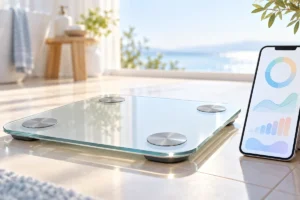
A smart scale’s most dependable job is measuring body weight and saving the result to an app. That can be useful if you want to notice a gradual change without remembering or writing down each reading. Some apps also make it easier to share a weight history with a healthcare professional when that history is relevant.
Look at the trend over weeks, not a single morning’s number. Weight can shift from day to day because of food, fluid, and other normal factors. For a fairer comparison, use the scale on a firm, level floor at roughly the same time of day. A scale that saves readings for several household members can be convenient, provided it assigns them correctly.
Wireless syncing is a convenience, not a health benefit by itself. If you only want an occasional weight check, a basic digital scale may be enough. If you already use an activity device, our guide to fitness trackers and smartwatches can help you decide whether another connected gadget would add anything useful.
Why Body Composition Numbers Need Caution
Many smart scales estimate body fat, muscle mass, and water percentage by sending a small electrical signal through the body. These are estimates, not direct measurements. Hydration, a recent meal, exercise, and how your feet contact the scale can all affect the result. A precise-looking decimal does not make the estimate precise.
These figures may help some people follow broad changes when they measure under similar conditions, but they should not be treated as a diagnosis. A surprising result on one day is rarely a reason to change your diet or exercise plan. If body composition is important to your care, ask a healthcare professional which measurement method makes sense for you.
Check the manufacturer’s safety instructions before using a scale’s body composition feature, particularly if you have an implanted medical device or are pregnant. You may still be able to use its weight-only mode. For many buyers, the sensible approach is simple: judge a smart scale by how reliably it records weight, and treat its extra figures as rough context at most.
Digital Thermometers: A Simple Reading That Matters
A digital thermometer is often more useful at home than a gadget with a long list of health scores. It can help you check whether someone has a fever and follow a temperature change during an illness. The reading is most helpful when you know where and how it was taken, because oral, ear, forehead, and underarm measurements are not directly interchangeable.
Follow the instructions for your thermometer. Placement and timing matter: an ear thermometer needs correct positioning, while a forehead model can be affected by how it is used. If a result seems inconsistent with how someone feels, take another reading using the instructions rather than trusting the first number without question.
An app-connected thermometer may help a household keep a time-stamped record, but a dependable basic model and a written note can do the same job. Record symptoms as well as temperature if you need to discuss an illness with a clinician. Seek medical advice when symptoms are concerning, and follow age-specific guidance for infants; no home thermometer can judge the full situation on its own.
Pulse Oximeters: Useful in Context, Easy to Misread
A fingertip pulse oximeter estimates blood oxygen saturation and displays a pulse rate. It can be useful when a clinician has recommended home monitoring and explained what readings should prompt a call. Without that plan, repeated checks may create worry without answering a clear question.
Readings have limits. Cold hands, movement, nail polish, poor circulation, and device quality can affect results. Pulse oximeters can also overestimate oxygen levels in people with darker skin pigmentation. A normal-looking number does not rule out a serious problem, and a single unexpected number should be checked rather than interpreted on its own.
Use the device as directed, sit still, and allow the reading to settle. Pay attention to symptoms alongside the number. If someone has severe trouble breathing, chest pain, confusion, or another urgent symptom, seek urgent medical help rather than waiting for a gadget to confirm the problem. For routine use, a pulse oximeter is best understood as one limited source of information, not an all-clear signal.
Apps, Accounts, and Health Data Privacy
Before choosing a connected gadget, find out what happens to its data. Some devices work without an account; others require an app and an internet connection to show trends. Check whether you can export or delete readings, whether family members need separate profiles, and whether the company explains how it handles health information.
A clear graph can make a useful pattern easier to spot. It can also encourage you to check numbers more often than you need to. Turn off alerts that do not support a specific goal, and avoid sharing sensitive readings with an app merely because the option is there. If the app stops receiving updates, consider whether the device will still do its basic job.
Phone space and syncing are practical concerns, especially if you use several companion apps. Our guide to freeing up storage on an Android phone covers ways to manage crowded storage. The best health record is one you can understand and use, whether it lives in an app, a notebook, or a note you bring to an appointment.
Choose a Measurement Before Choosing a Gadget
Start with a question: what decision will this number help you make? A weight trend may support a goal you have discussed with a clinician. Temperature can add context when someone is ill. Oxygen readings may matter when a clinician has given you a monitoring plan. If you cannot name a useful action, automatic tracking may only add noise.
Ease of use matters more than a long feature list. Check that the display is readable, the controls make sense, and replacement batteries or charging are manageable. For a rechargeable device, use a suitable cable and power source; our guide to USB-C cables and chargers explains why a familiar-looking connector does not tell you everything about compatibility.
Connected devices should also fit the way you live. If you prefer a simpler setup, our smart home starter guide offers a useful reminder to add devices for a clear purpose, not just because they can connect. The same rule applies here: collect fewer numbers, understand them better, and ask for medical guidance when a reading affects care.
Practical Comparison: What Is Worth Tracking?
You do not need to track every reading a device offers. Pick the measurement that answers a real question, then decide how often it is useful to record it. This quick comparison can help you separate a helpful tool from an attractive dashboard.
- Smart scale weight: Useful for a longer-term trend when measured consistently. Daily changes are common, so avoid judging progress from one reading.
- Smart scale body composition: A rough estimate with many sources of variation. Do not use it to diagnose a health problem or make major decisions.
- Digital thermometer: Useful during illness when used correctly. Note the measurement method and symptoms along with the result.
- Pulse oximeter: Most useful with a clinician’s plan for what to do with the readings. Symptoms matter even when the displayed number looks normal.
- App graphs and alerts: Helpful only when they clarify a pattern or support an action. Disable alerts that repeatedly flag numbers you do not need to monitor.
When comparing devices, favor clear instructions and a reliable basic function over extra scores. Keep a simple record if you need one, and bring questions about worrying readings to a healthcare professional.
Frequently Asked Questions
Is a smart scale more accurate than a basic digital scale?
Not necessarily for weight. A smart scale mainly adds automatic records and graphs; its body composition figures are estimates.
Should I track my weight every day?
Daily weighing can help some people see a longer-term trend, but it is not necessary for everyone. Choose a routine that supports your goal without making normal changes stressful.
Do I need an app-connected thermometer?
Usually not. A dependable digital thermometer and a simple record of readings and symptoms can be enough.
Can a normal pulse oximeter reading rule out breathing problems?
No. Pulse oximeters have limitations, so seek medical help for concerning symptoms even if the displayed reading looks normal.
Final Thoughts
The most useful home health gadget is the one that answers a specific question without making its limits easy to forget. Track weight trends, temperature, or oxygen readings when they serve a clear purpose; treat estimated scores and app alerts with more caution. When health decisions are at stake, use the data to start a better conversation with a healthcare professional, not replace one.