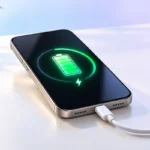
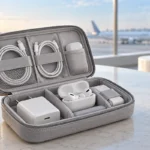
Travel gets easier when all your tech lives in one small pouch instead of being spread across three bags. We researched compact gear that covers charging, power, audio and a few smart extras, and picked ten gadgets that fit together without the bulk. Here is what to carry, why it matters, and what to look for when you shop.
Why One Pouch Is Enough
Most travelers carry more tech than they need. A separate charger for every device, a tangle of old cables and a heavy power bank can fill half a backpack.
The good news is that modern devices have become more alike. Most new phones, tablets, earbuds and many laptops now charge over USB-C. That means one good charger and a couple of the right cables can replace a whole drawer of old adapters.
A single pouch also makes airport security and hotel check-ins calmer. You know where everything is. You can pull it out at a café, charge what you need, and pack it up again in seconds.
Our list follows one simple rule: every item must earn its space. If a gadget does only one rare job, or if your phone already does it well, it did not make the cut. The ten picks below are small, light and useful on almost any trip, from a weekend away to a long flight overseas.
Power Basics: Charger, Cables and Travel Adapter
1. A compact multi-port GaN charger. Chargers built with gallium nitride (GaN) are smaller and run cooler than older designs. A 65W model with two or three ports can usually charge a phone, earbuds and a light laptop. Check your laptop’s required wattage before you buy.
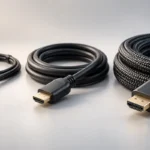
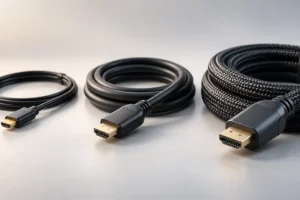
2. Two short USB-C cables. One USB-C to USB-C cable rated for at least 60W covers most devices. A second cable lets you charge two things at once. If you still use an older iPhone, swap one for a USB-C to Lightning cable. Shorter cables, around 0.5 to 1 meter, tangle less and pack flatter.
3. A universal travel adapter. Plug shapes change from country to country. A universal adapter with sliding plugs for common regions saves you from buying a new one at every airport. Remember that most adapters only change the plug shape. They do not convert voltage. Luckily, most phone and laptop chargers accept a wide voltage range, so this is rarely a problem. Look for the input range printed on your charger to be sure.
Power on the Go: The Right Power Bank
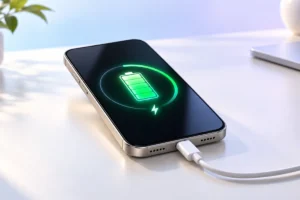
4. A 10,000mAh USB-C power bank. This size is the sweet spot for most travelers. It can typically refill a phone around one and a half to two times, depending on the phone, and it is still small enough to fit in a pocket.
Larger banks of 20,000mAh or more are useful for laptops or long trips without outlets. But they are heavier and take up much more room in a small pouch.
When comparing models, look for these features:
- A USB-C port that works for both input and output, so the same cable charges the bank and your phone.
- Fast charging support such as USB Power Delivery, often listed as “PD.”
- A clear battery level display or indicator lights.
- The watt-hour (Wh) rating printed on the case.
That last point matters for flying. Many airlines allow power banks under 100Wh in carry-on bags only, never in checked luggage. A 10,000mAh bank is usually well under that limit. Rules vary by airline and country, so check before you fly.
Audio and In-Flight Comfort
5. Wireless earbuds with a compact case. Earbuds are one of the most useful travel gadgets you can own. They are tiny, and models with active noise cancellation can make engine noise, busy trains and loud waiting areas much easier to handle.
Choose a pair whose case charges over USB-C, so it shares the same cable as everything else. A case that also supports wireless charging is a nice bonus but not essential.
6. A small Bluetooth audio transmitter. Many in-flight entertainment screens still use a standard headphone jack. Wireless earbuds cannot connect to them on their own. A small transmitter plugs into the jack and sends audio to your earbuds over Bluetooth.
It is a small item, often about the size of a thumb drive, and it also works with gym equipment and some older car stereos. If you prefer, a cheap pair of wired earphones can do the same job with no charging needed. Either way, it solves a common annoyance on long flights.
Small Extras That Solve Big Problems
7. A Bluetooth item tracker. Slip one into your checked bag or attach it to your keys. If your luggage goes missing, you can often see its last known location on your phone. Pick a tracker that matches your phone’s ecosystem for the best coverage.
8. A USB-C to USB-A adapter. Hotel rooms, rental cars and plane seats still often have only the older, larger USB-A ports. This tiny adapter lets your USB-C cable plug into them. It weighs almost nothing and saves you from carrying an extra cable.
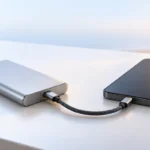
9. A compact USB-C hub or card reader. If you travel with a laptop or a camera, a small hub can add an HDMI port, a USB-A port and an SD card slot. It is handy for backing up photos or connecting to a hotel TV.
10. A small USB-C flash drive. Keep copies of your tickets, passport scan and important photos offline. A flash drive works even when Wi-Fi is slow or cloud access is blocked. Consider encrypting sensitive files before you leave.
Choosing the Right Pouch
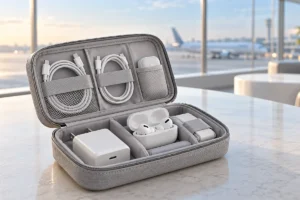
The pouch itself matters more than people expect. A good one keeps cables from tangling and protects small items from getting crushed in your bag.
Here is what to look for:
- Size: Roughly the size of a large paperback book is enough for all ten items. Bigger pouches tend to fill up with things you do not need.
- Layout: Elastic loops hold cables neatly, and a few small zip pockets keep adapters and trackers from getting lost.
- Opening: A clamshell design that opens flat makes it easy to see everything at once.
- Material: Water-resistant fabric helps if you get caught in the rain or a bottle leaks in your bag.
- Shape: A slim, soft pouch fits more easily into a backpack sleeve or tote.
If you are on a budget, a simple zip pencil case or toiletry bag works fine. The goal is one home for all your tech, not a fancy organizer.
Practical Packing Tips Before You Leave
A little preparation goes a long way. Run through this short checklist a day or two before your trip:
- Charge everything the night before. Start with a full power bank, full earbuds and a full phone.
- Test your cables. A frayed or loose cable is easy to replace at home and hard to replace at a remote stop.
- Match the charger to your laptop. Check the wattage your laptop needs. A charger that is too weak may charge it very slowly or not at all while in use.
- Keep the power bank in your carry-on. Most airlines do not allow spare lithium batteries in checked bags.
- Check plug types for your destination. Make sure your universal adapter covers the country you are visiting.
- Pair your earbuds and transmitter at home. Sorting out pairing in a dark plane cabin is no fun.
- Leave duplicates behind. If two items do the same job, pack only one.
Once your pouch is packed, take a quick photo of its contents. If something goes missing, you will know exactly what to look for.
Frequently Asked Questions
Can I bring a power bank on a plane?
In most cases, yes, but only in your carry-on bag. Many airlines allow power banks under 100Wh without special approval. Always check your airline’s current rules before you travel.
Do I need a voltage converter for my phone or laptop charger?
Usually not. Most modern phone and laptop chargers accept roughly 100 to 240 volts. Look at the small print on your charger. If it shows that range, a simple plug adapter is all you need.
Is one charger really enough for all my devices?
For many travelers, yes. A 65W multi-port charger can handle a phone, earbuds and a light laptop. If you carry a powerful laptop, you may need a higher-wattage charger or your laptop’s own charger.
Are cheap cables safe to use?
Very cheap, unbranded cables can be poorly made and may charge slowly. Look for cables from known brands that clearly state their wattage rating. For Apple devices that still use Lightning, choose MFi-certified cables.
Final Thoughts
You do not need a big bag of gadgets to travel well. A compact charger, a couple of good cables, a sensible power bank, a universal adapter and a few smart extras will cover most trips. Choose gear that shares USB-C where you can, keep it all in one pouch, and check airline rules before you fly. Simple, light and organized is the best travel tech setup of all.