Home weather stations and indoor sensors promise your own personal forecast, live from your backyard or living room. Some of that data is genuinely useful, and some of it is mostly fun to look at. We researched how these gadgets work, where they do well, and where they fall short, so you can decide if one belongs in your home.
What a Home Weather Station Actually Is
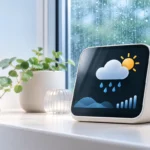
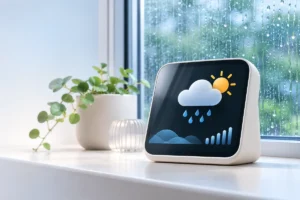
A home weather station is a set of sensors that measures conditions where you live. Usually there is an outdoor unit and an indoor display or a phone app. The outdoor unit sends readings to the display by radio or Wi-Fi.
Basic models only measure outdoor temperature and humidity. Mid-range models add a rain gauge, wind speed and direction, and air pressure. Higher-end models may add sunlight, UV, and lightning detection.
Many newer stations are “all-in-one” units. Every sensor sits in one compact body on a single pole. This is easy to install, but it is also a compromise. Each sensor works best in a different spot, and one pole cannot be perfect for all of them.
It also helps to know what a station is not. It does not forecast the weather the way a national weather service does. Most “forecasts” on the display are simple guesses based on pressure changes, or they are pulled from an online service. What you really get is a record of what is happening at your home right now.
What Consumer Stations Measure Well
Some readings are reliable even on modest hardware. The sensors are mature, cheap to make, and fairly stable over time.
- Air pressure: Pressure sensors are usually accurate and stable. The trend matters more than the exact number. A steady fall often hints at incoming wet weather.
- Temperature: The sensor itself is usually good to within about a degree. The problem is placement, not the chip.
- Humidity: Generally decent, though readings can drift over a few years and are less exact at very high humidity.
- Rainfall: Tipping-bucket and similar gauges are good at showing when it rained and roughly how much.
This is where a home station earns its keep. Your local rainfall total can differ a lot from the official figure measured miles away. Gardeners, in particular, find that number useful.
Temperature trends are also helpful. Knowing that your yard drops below freezing earlier than the city reading is real, practical information.
Where Accuracy Falls Apart
Most bad readings come from where the station is placed, not from the sensors. Put a temperature sensor in direct sun, and it can read several degrees too high on a bright day. Mount it near a brick wall, a roof, or a driveway, and stored heat will skew it into the evening.
Professional stations use a ventilated radiation shield, often with a fan. Many cheap units have small, basic shields that struggle in strong sun and still air. The same heat problem affects other electronics too, as we explain in our guide on protecting your gadgets from summer heat.
Wind is the hardest reading to get right. Ideally, a wind sensor sits well above the ground and away from buildings and trees. Most backyards cannot offer that, so wind speeds often read low and gusty.
Rain gauges can also mislead. Gauges under trees or near walls miss rain. Leaves, dust, and insects can clog them. Plastic parts can wear out in strong sun over the years.
Indoor Sensors: Comfort and Air Quality
Indoor sensors are often the more useful half of the package. Most stations include an indoor temperature and humidity reading. Separate small sensors can be placed in different rooms.
Humidity is the standout here. Very dry air can make skin and eyes uncomfortable. Very damp air can encourage mold and condensation, especially in bathrooms, basements, and bedrooms. A cheap hygrometer can show you which rooms need attention.
Some indoor monitors also measure carbon dioxide (CO2). Rising CO2 is a simple sign that a room needs fresh air. Look for monitors that use an NDIR sensor, which is the type designed to measure CO2 directly. Some cheaper devices only estimate it from other gases.
A CO2 monitor can be handy in a small workspace. If you spend long days at a desk, it pairs well with the advice in our guide to setting up a home office on a small budget.
Particle (PM2.5) and VOC readings are useful for spotting trends, like smoke or cooking fumes. Treat the exact numbers from low-cost sensors as rough estimates.
Apps, Wi-Fi, and Smart Home Links
Older stations only show data on a desk display. Newer ones send readings to a phone app over Wi-Fi. That lets you see history charts, set alerts, and check conditions while away from home.
Before buying, check a few things:
- Does the station need a cloud account to work, or does it also work locally?
- Is there a subscription for full history or advanced features?
- Can it share data with weather networks if you want to contribute?
- Does it work with the smart home platform you already use?
Smart home links can be the most practical feature. A humidity reading could trigger a dehumidifier, or a rain reading could pause a sprinkler. If you are new to this, our smart home starter guide covers the basics.
Also think about range. Outdoor sensors at the far end of a yard can drop signal. Most use their own low-power radio to reach an indoor hub, but that hub still needs a stable home network connection.
Who Actually Benefits From One
A home weather station is a good fit for some people and a pricey toy for others. Here is an honest breakdown.
Likely to benefit:
- Gardeners and small growers who want local rain and frost data.
- People in rural areas far from official weather stations.
- Homeowners dealing with damp, mold, or very dry indoor air.
- Weather hobbyists who enjoy tracking data and sharing it online.
- Smart home users who want automations based on real conditions.
Probably will not benefit much:
- City dwellers with a balcony and no good mounting spot.
- Anyone who only wants tomorrow’s forecast. A free weather app does that better.
- People who will not maintain the gear, such as cleaning gauges and changing batteries.
For many households, a couple of small indoor temperature and humidity sensors offer most of the real value for far less money than a full outdoor station.
Practical Tips for Getting Useful Data
A modest station that is set up well will beat an expensive one placed badly. These simple habits make the biggest difference.
- Shade the temperature sensor: Mount it in a shaded, open spot, roughly head height, over grass rather than concrete.
- Keep it away from heat sources: Avoid walls, roofs, vents, air conditioner units, and grills.
- Give rain a clear path: Place the gauge level and away from trees and overhangs.
- Mount wind sensors high: Get them as clear of buildings and trees as you safely can.
- Check your network: If the hub keeps dropping offline, your Wi-Fi coverage may be the issue. Our article on whether you need Wi-Fi 6 or Wi-Fi 7 explains when an upgrade helps.
- Compare with a trusted source: Check readings against a nearby official station now and then. Small, steady differences are normal.
- Clean and maintain: Clear the rain gauge every few months and replace batteries before winter.
- Start indoors: If unsure, buy one or two indoor sensors first and see if you use the data.
Frequently Asked Questions
Are home weather stations accurate?
The sensors are often reasonably accurate, especially for pressure, temperature, and rainfall. Most errors come from poor placement, such as direct sun or nearby walls, rather than from the hardware itself.
Can a home weather station replace my weather app?
Not for forecasts. A station tells you what is happening at your home right now, while weather apps use large professional models to predict what will happen next.
Is an indoor humidity sensor worth it?
For many homes, yes. It is an inexpensive way to spot rooms that are too damp or too dry, which can help with comfort and with preventing mold.
Why does my station read hotter than the official temperature?
It is usually getting direct sun or heat from a nearby wall, roof, or paved surface. Moving it to a shaded, open spot over grass often fixes most of the difference.
Final Thoughts
Home weather stations are not toys, but they are not professional tools either. They are good at local rainfall, temperature trends, pressure changes, and indoor humidity. They are weaker at wind and anything that depends on perfect placement.
If you garden, live far from an official station, or want smarter home automations, one can be genuinely useful. If you just want a forecast, your phone already does that well. Start small, place your sensors carefully, and let the data prove its worth.